Service Dogs for Sale in Washington State: Professionally Trained Assistance Dogs

David Baron • January 19, 2026

Choosing the right service dog is one of the most important decisions a person with a disability can make. A properly trained service dog can provide independence, safety, emotional stability, and daily assistance that transforms quality of life. At Service Dog School of America , we specialize in professionally training service dogs that are prepared to perform real world tasks for individuals with medical, physical, and psychiatric conditions.

Across Washington State, families and individuals in cities such as Seattle, Bellevue, Spokane, Kirkland, Tacoma, and surrounding communities are increasingly seeking professionally trained service dogs that meet the highest standards of reliability and performance. These dogs are not simply companions. They are highly skilled working partners trained to help their handlers manage daily challenges with confidence.

At Service Dog School of America, our mission is to train service dogs that deliver real results. With decades of professional dog training experience and a specialized focus on medical and psychiatric service dogs, our program is designed to produce dogs capable of performing complex tasks while maintaining exceptional behavior in public environments.

For individuals in Washington State seeking a dependable, professionally trained service dog, understanding the training process, the roles service dogs perform, and what to expect during placement is essential.

What Is a Service Dog and Who Qualifies for One?

A service dog is a dog trained to perform tasks that assist an individual with a disability. Under the Americans with Disabilities Act (ADA) , service dogs are granted legal access to public places where pets are normally not allowed because they perform essential tasks that mitigate the effects of a disability.

At Service Dog School of America, we work with individuals experiencing a wide range of qualifying conditions, including:

Each service dog is trained to perform tasks that directly assist the handler with daily life challenges related to these conditions.

The Role of Service Dogs: Tasks That Improve Daily Life

Service dogs are trained to perform highly specialized tasks that improve safety, independence, and emotional stability.

Medical Alert Tasks

Medical alert service dogs are trained to detect subtle physiological changes in the body. These dogs may alert their handler to:

  • Seizure activity
  • Dangerous blood sugar changes
  • Cardiac abnormalities
  • Emotional distress or panic episodes

Early alerts allow individuals to respond to potential medical emergencies before symptoms escalate.

Mobility Assistance Tasks

Mobility assistance service dogs support individuals with physical disabilities by helping with everyday tasks such as:

  • Retrieving dropped objects
  • Opening doors and cabinets
  • Turning lights on or off
  • Providing balance and stability support
  • Assisting individuals who use wheelchairs

These tasks help individuals navigate daily life more safely and independently.

Psychiatric Service Dog Tasks

Psychiatric service dogs assist individuals managing mental health conditions. These dogs may be trained to:

  • Interrupt panic attacks
  • Wake individuals from night terrors
  • Provide grounding during dissociation
  • Create physical space in crowded environments
  • Guide their handler to a safe location when overwhelmed

At Service Dog School of America, psychiatric service dogs receive specialized training designed to support individuals facing complex emotional and neurological challenges.

Autism Assistance Tasks

Autism service dogs can help children and adults maintain structure, safety, and calm in daily life. Tasks may include:

  • Preventing wandering
  • Providing calming pressure during meltdowns
  • Establishing routines and predictability
  • Helping with transitions in overstimulating environments

For many families in Washington State, autism service dogs provide stability that improves both safety and emotional well being.

Types of Service Dogs Available in Washington State

The needs of individuals seeking service dogs vary widely. At Service Dog School of America, our training programs produce dogs prepared for several specialized service roles.

Medical Alert Service Dogs

These dogs are trained to detect early signs of medical emergencies, often providing warnings minutes before symptoms become noticeable.

Mobility Assistance Dogs

Mobility service dogs assist individuals with physical disabilities by performing tasks that support balance, movement, and daily activities.

Psychiatric Service Dogs

Psychiatric service dogs are trained to support individuals experiencing PTSD, anxiety disorders, depression, or trauma related conditions.

Autism Service Dogs

Autism assistance dogs provide emotional stability, safety, and routine support for children and adults on the autism spectrum.

Hearing Assistance Dogs

Hearing service dogs alert their handlers to important sounds such as alarms, doorbells, approaching vehicles, or crying children.

Every dog trained by Service Dog School of America is prepared to perform in real world environments, not just controlled training facilities.

Our Professional Service Dog Training Process

Training a reliable service dog requires a structured program that focuses on both behavior and specialized task performance.

Foundational Obedience Training

Every service dog begins with advanced obedience training to establish discipline and focus.

This stage includes:

  • Reliable response to commands
  • Calm behavior in crowded environments
  • Controlled leash walking
  • Ignoring distractions

These foundational skills prepare the dog for advanced service work.

Task Specific Training

Once obedience is mastered, dogs are trained to perform the tasks required by their future handler.

Training may include:

  • Medical alert responses
  • Retrieval tasks
  • Panic interruption behaviors
  • Mobility support actions

Each task is practiced repeatedly until the dog performs reliably and confidently.

Public Access Training

Service dogs must behave appropriately in public spaces. Our dogs are trained in environments such as:

  • Restaurants and shopping centers
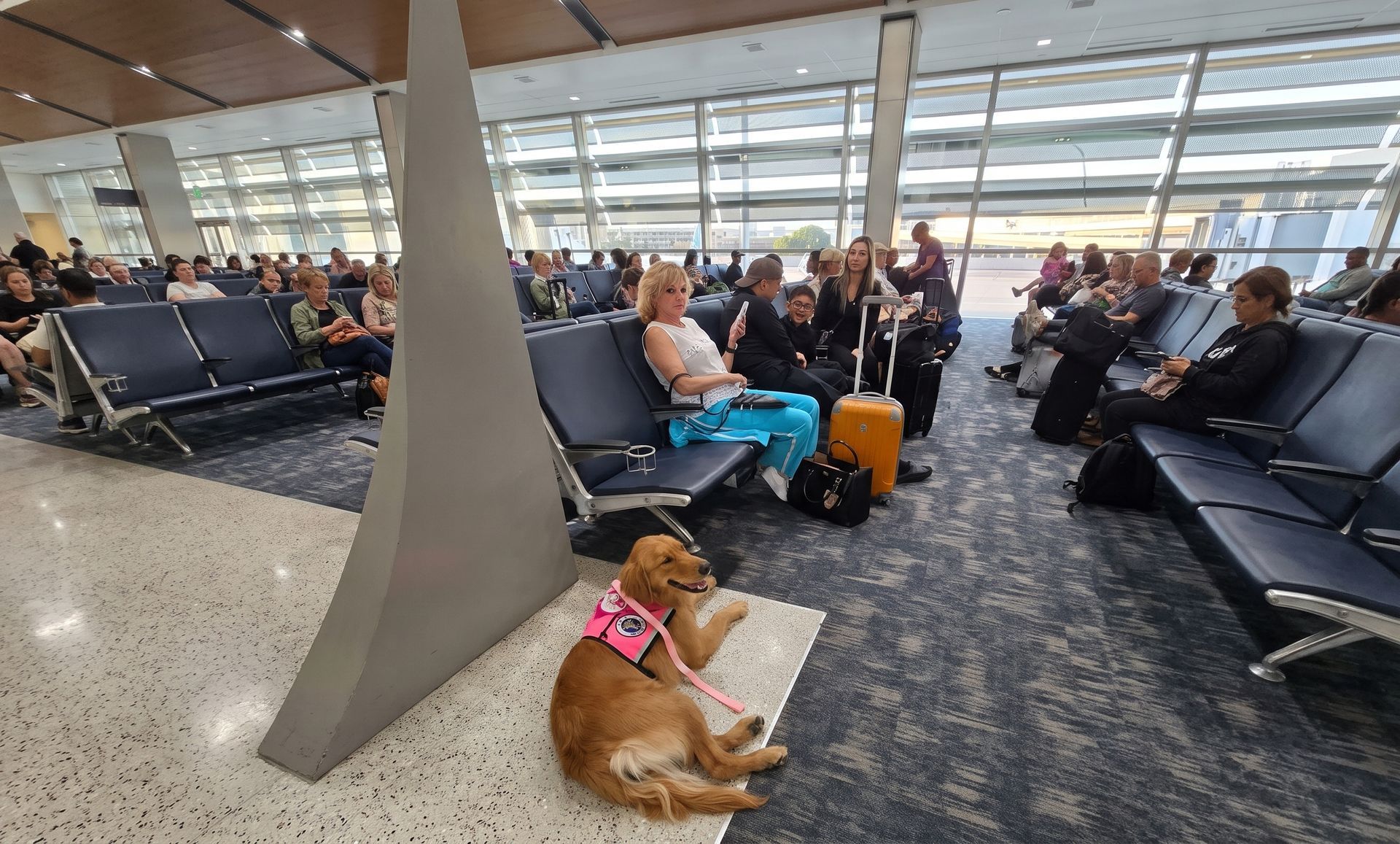
  • Airports and public transportation
  • Medical offices and hospitals
  • Busy urban environments like downtown Seattle

This ensures that service dogs remain calm, focused, and non disruptive.

Public Access Rights for Service Dogs in Washington

Service dogs trained by Service Dog School of America meet the behavioral standards required under the Americans with Disabilities Act.

This means service dogs are legally allowed to accompany their handlers in locations such as:

  • Restaurants and cafes
  • Hotels and office buildings
  • Retail stores and shopping centers
  • Public transportation
  • Airports and travel hubs

To maintain these privileges, service dogs must remain under control and demonstrate excellent public behavior.

What Clients Can Expect When Working With Service Dog School of America

Individuals seeking service dogs for sale in Washington State can expect a personalized process designed to match them with the right dog.

Initial Consultation

We begin with a detailed consultation to understand the client’s condition, lifestyle, and specific assistance needs.

Dog Selection

Based on this information, our trainers identify the dog best suited for the client’s requirements.

Custom Training

Each service dog receives specialized training tailored to the tasks required for the individual handler.

Handler Training

Clients learn how to work with their service dog, communicate effectively, and maintain training standards.

Delivery and Integration

Service dogs are delivered and integrated into the client’s daily life, whether they live in Seattle, Spokane, Bellevue, Tacoma, or other communities throughout Washington.

Lifetime Support

Our commitment does not end after placement. We provide ongoing guidance and support to ensure long term success.

Understanding the Investment in a Professionally Trained Service Dog

A professionally trained service dog represents a significant investment. The cost reflects the extensive time, expertise, and resources required to train a reliable working animal.

A fully trained service dog typically costs between $30,000 and $60,000 or more, depending on the complexity of tasks and specialized training required.

This investment covers:

  • Extensive professional training
  • Temperament evaluation and dog selection
  • Veterinary care and health screening
  • Public access training
  • Task specific disability training
  • Client education and ongoing support

For many individuals, the independence and safety provided by a service dog far outweigh the financial investment.

Why Service Dog School of America Is Trusted Nationwide

At Service Dog School of America, we are committed to delivering exceptional service dogs that meet the highest training standards.

Our program stands apart because we provide:

  • Custom trained service dogs tailored to each client’s needs
  • Immediate placement without multi year waiting lists
  • Extensive real world training environments
  • Lifetime support for our clients
  • A satisfaction guarantee unmatched in the industry

Our goal is not simply to provide a trained dog but to create a lasting partnership that improves the client’s life.

Begin Your Journey Toward Greater Independence

A professionally trained service dog can provide life changing support for individuals living with disabilities. These highly trained working dogs help restore independence, increase safety, and improve overall quality of life.

At Service Dog School of America, we are proud to train service dogs that perform real tasks, behave confidently in public environments, and provide meaningful assistance to the individuals who depend on them.

If you are searching for service dogs for sale in Washington State, our team is here to guide you through every step of the process. From consultation to training to placement, we are committed to helping you find a service dog that truly meets your needs.

Contact Service Dog School of America today to learn more about our professionally trained service dogs and begin your journey toward greater independence and confidence.
 

By David Baron • April 10, 2026
Can I Take My Service Dog To Work With Me? Bringing a service dog to work can be a life-changing decision. It offers support and independence for individuals with disabilities. But can you take your service dog to work with you? Service dogs are more than pets; they are trained to perform specific tasks. These tasks help their handlers manage disabilities. From medical alerts to psychiatric support, service dogs play vital roles. The Americans with Disabilities Act (ADA) protects the rights of service dog handlers. This includes the right to bring a service dog to work. Employers must provide reasonable accommodations unless it causes undue hardship. Service dogs can improve workplace productivity and well-being. They help manage stress, anxiety, and other challenges. Their presence can foster a more inclusive work environment. Understanding the legal aspects and practical considerations is crucial. Employers and employees must work together. This ensures a smooth integration of service dogs in the workplace. In this article, we explore the benefits and challenges. We provide insights into the transformative power of service dogs at work. Understanding Service Dogs in the Workplace Service dogs play a crucial role in supporting employees with disabilities. They are trained specifically to […]
A person walks two brown dogs past a currency exchange storefront on a city sidewalk.
By David Baron • April 10, 2026
Can I Take My Service Dog On A Cruise Ship? Traveling with a service dog can be a rewarding experience. It offers independence and support for those with disabilities. But what about taking your service dog on a cruise ship? Cruise ships are unique environments. They present both opportunities and challenges for service dog handlers. Understanding the policies and preparations is key to a successful voyage. Service dogs are generally allowed on cruise ships. However, each cruise line has its own set of rules. It’s crucial to check these policies before booking your trip. Documentation is often required. This may include proof of your dog’s training and vaccination records. Being prepared with the right paperwork can ease the boarding process. Onboard, service dogs must be well-behaved and under control. They should be trained to handle the ship’s environment, including crowds and confined spaces. International travel adds another layer of complexity. Different countries have varying regulations for service dogs. It’s important to research these rules if your cruise visits foreign ports. With the right preparation, a cruise can be an enjoyable experience for both you and your service dog. This guide will help you navigate the journey, ensuring a smooth and […]
A person with an orange backpack bends to pet a large black dog beside a seated person in a park.
By David Baron • April 10, 2026
Can I Take My Service Dog To Disneyworld or Disneyland? Planning a trip to Disneyworld or Disneyland is exciting. For those with service dogs, it requires extra preparation. Service dogs are welcome at Disney parks. They provide essential support for individuals with disabilities. Understanding the rules is crucial for a smooth visit. Disney has specific guidelines for service animals. These guidelines ensure safety and enjoyment for all guests. Service dogs must be trained for specific tasks. Emotional support animals are not considered service animals at Disney. This distinction is important to note. Disney offers various accommodations for service dogs. These include relief areas and assistance from staff. Proper planning can enhance your Disney experience. Knowing what to expect helps in managing your visit. This guide will explore everything you need to know. From rules to tips, we cover it all. Understanding Disney’s Service Dog Policy Disney values inclusivity and accessibility for all guests. Service dogs are welcome to support this mission. Disney’s policy aligns with the Americans with Disabilities Act (ADA). A service dog must perform specific tasks. These tasks are directly tied to the handler’s disability. Emotional support animals, by contrast, do not meet this criterion. Understanding the difference […]
A small dog lies in the aisle of a train between rows of blue seats.
By David Baron • April 10, 2026
Can A College Refuse To Allow Service Dogs On Campus? Navigating college life can be challenging for students with disabilities. Service dogs play a crucial role in supporting these students. They provide assistance and companionship, helping students manage their daily tasks. But what happens when a college questions the presence of a service dog on campus? This is a concern for many students with disabilities. Understanding the rights and regulations is essential. Service dogs are protected under the Americans with Disabilities Act (ADA). This means they can accompany their handlers in most public spaces, including college campuses. However, not all colleges are fully aware of these regulations. Students with psychiatric service dogs (PSD) often face unique challenges. They must advocate for their rights while managing their mental health needs. It’s important for these students to know their rights and responsibilities. Colleges have specific policies regarding service dogs. These may include vaccination requirements or behavior standards. Students must adhere to these policies to ensure a smooth experience. Collaboration between students, disability services, and college administration is key. This helps integrate service dogs into campus life effectively. It also fosters a more inclusive environment for all students. Understanding these dynamics is crucial […]
A person reaches to pet a gray-and-white dog standing on a paved walkway.
By David Baron • April 10, 2026
Will A Service Dogs Make Me A Happier Person? Service dogs are more than just loyal companions. They are trained to perform tasks that can transform lives. For many, these dogs are a lifeline to happiness and independence. Imagine a life where anxiety or physical limitations no longer hold you back. Service dogs can make this a reality. They provide support, companionship, and a sense of security. The bond between a service dog and its handler is unique. It is built on trust, understanding, and mutual respect. This connection can lead to increased happiness and well-being. Service dogs are trained to assist with a variety of needs. From psychiatric support to medical assistance, they are versatile and invaluable. They help individuals navigate daily challenges with confidence. The process of acquiring a service dog can be daunting. Long wait times and high costs are common barriers. However, the right approach can make this journey smoother and more rewarding. At the Service Dog School of America, we prioritize immediate, high-quality support. Our goal is to match the right dog with the right person. This ensures a successful partnership that enhances happiness. David Baron, a leading expert in service dog training, emphasizes this […]
A golden retriever rests beside a person in a gray coat behind a green concrete wall, with leafy greenery in the background.
By David Baron • February 7, 2026
For many people who rely on a service dog, the bond goes far beyond companionship. A service dog becomes a partner, protector, and constant source of stability. When one of these extraordinary animals passes away, it is natural to ask difficult and emotional questions. One of the most common is deeply personal: Do service dogs go straight to heaven? At Service Dog School of America, we have spent decades training service dogs and working closely with individuals whose lives have been transformed by them. We have witnessed the extraordinary connection between handlers and their dogs. We have also supported many clients through the grief that comes when a beloved service dog reaches the end of their life. While no one can definitively answer questions about the afterlife, what we can say with certainty is this: service dogs live lives defined by loyalty, service, and unconditional love. Their impact on the people they help is profound and lasting. For many handlers, believing that their service dog’s spirit continues somewhere peaceful offers comfort and healing. Regardless of personal beliefs, what matters most is honoring the life, dedication, and legacy of these remarkable animals. The Extraordinary Bond Between Service Dogs and Their Handlers […]
A dark-coated dog looks left in profile, wearing a collar against a softly blurred outdoor background.
By David Baron • February 6, 2026
Service dogs are far more than helpful companions. They are trained working partners who provide safety, independence, and daily support for people living with disabilities. For many individuals, a service dog becomes one of the most important relationships in their life. At Service Dog School of America, we often hear an important question from clients who depend on their service dog every day: What happens if I outlive my service dog? This is a realistic and important topic to consider. Service dogs have a limited working lifespan, and thoughtful planning ensures that you continue receiving the support you need throughout your life. Preparing for the future does not diminish the bond with your current dog. Instead, it protects your independence and ensures that your care remains uninterrupted. Through decades of professional training experience, Service Dog School of America helps clients navigate the full life cycle of service dog partnerships, from initial placement to eventual retirement and replacement. Understanding what lies ahead allows you to honor your current dog while preparing for the next chapter. Understanding Service Dog Life Expectancy Like all dogs, service dogs have a natural lifespan that varies depending on breed, genetics, and overall health. Most service dogs […]
A tan and black dog looks up attentively from behind a dark railing as a person reaches toward it.
By David Baron • February 5, 2026
Living with orthostatic hypotension can make everyday life unpredictable. Standing up too quickly can trigger dizziness, weakness, blurred vision, or even sudden fainting. For many people, the fear of collapsing without warning can limit independence, restrict activities, and create constant anxiety. At Service Dog School of America, we have worked with individuals facing complex medical and neurological conditions for decades. One question we frequently hear is whether a service dog can help someone living with orthostatic hypotension. The answer is often yes. A properly trained service dog can provide stability, early warning behaviors, and daily assistance that significantly improves safety and quality of life. Service dogs are not simply pets offering companionship. They are highly trained working partners that perform specific tasks designed to mitigate the effects of a medical condition. For individuals experiencing frequent blood pressure drops or fainting episodes, a service dog can become an essential source of both physical support and emotional reassurance. Our mission at Service Dog School of America is to develop fully trained service dogs that are prepared for real-world situations from the moment they are placed with their handler. Through specialized training, these dogs help people reclaim confidence, independence, and peace of mind. […]
Show More