Why Golden Retrievers Are the Top Choice for Psychiatric Service Dogs

David Baron • January 31, 2026

Psychiatric service dogs play a vital role in helping individuals manage mental health conditions and regain stability in daily life. At Service Dog School of America , we have spent decades training service dogs that provide real, measurable support for people living with conditions such as PTSD, severe anxiety, depression, autism, panic disorders, and other psychiatric or neurological challenges.

Among all breeds used for psychiatric service work, retrievers consistently stand out as the most reliable and effective. Both Labrador Retrievers and Golden Retrievers are widely recognized for their intelligence, emotional sensitivity, and adaptability. These traits make them ideal candidates for the complex responsibilities of psychiatric service work.

At Service Dog School of America, we focus exclusively on Golden Retrievers because their temperament, trainability, and emotional awareness allow them to perform the demanding tasks required of a true psychiatric service dog. With the right training and guidance, these dogs become life-changing partners who help individuals rebuild confidence, independence, and emotional stability.Golden Retriever engaging with a handler

Why Retrievers Lead the Field in Psychiatric Service Work

Not all dogs are suited for service work. Psychiatric service dogs must remain calm under pressure, maintain focus in busy environments, and perform tasks reliably in situations where their handler may be experiencing distress.

Retrievers consistently meet these standards because of several key characteristics.

Exceptional Intelligence and Trainability

Retrievers are among the most intelligent dog breeds. They learn commands quickly and retain complex behaviors over time. This allows trainers to teach them advanced service tasks that require both precision and reliability.

Psychiatric service dogs must often perform tasks that involve interpreting subtle human behaviors or responding to emotional changes. Retrievers are particularly well suited to this work because they can learn and execute complex behaviors consistently.

Calm and Stable Temperament

Service dogs must remain composed in environments that can be overwhelming for their handlers. Retrievers are naturally calm, patient, and emotionally stable.

Their temperament allows them to remain focused in places such as:

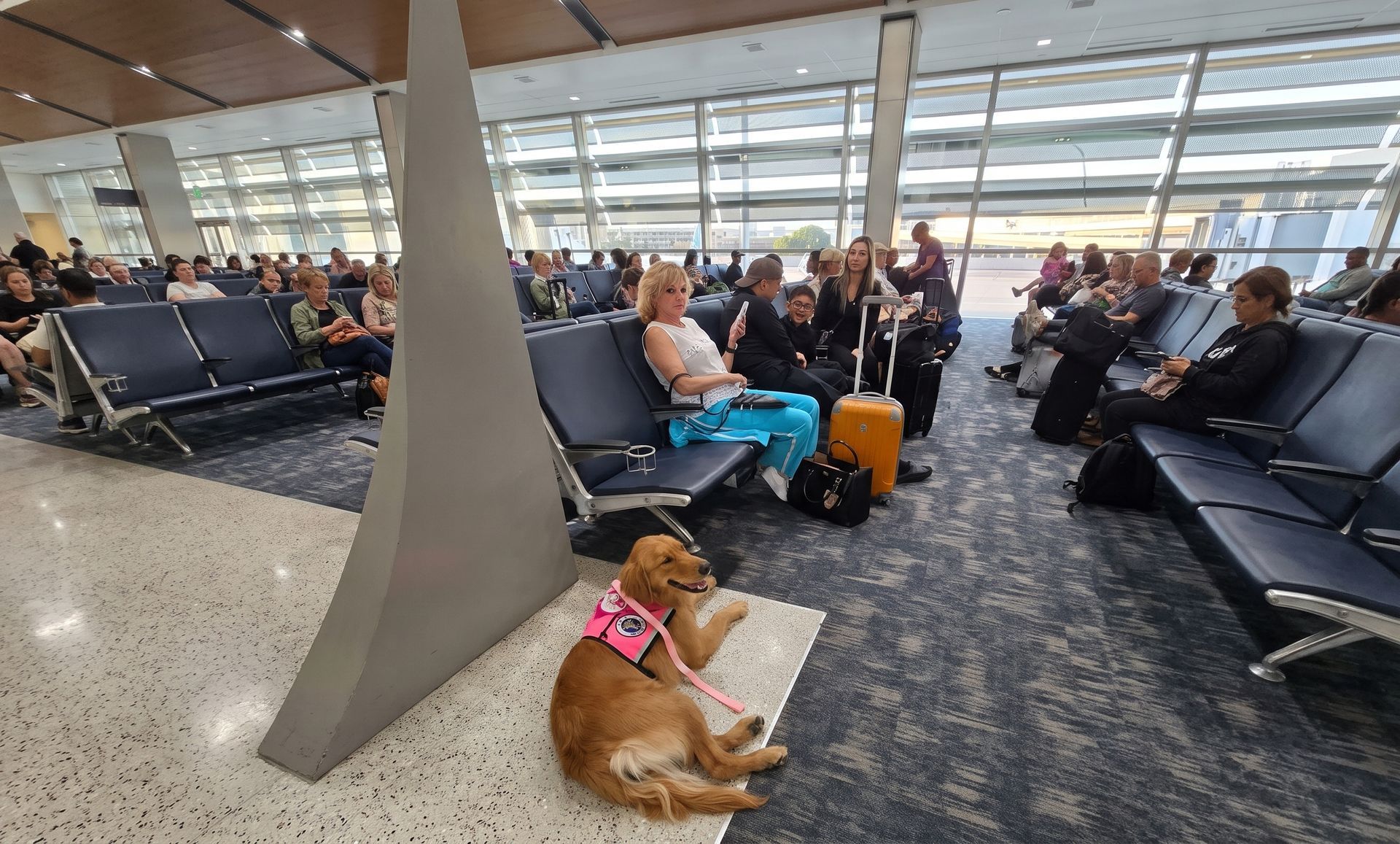
  • Airports and airplanes
  • Restaurants and crowded public spaces
  • Schools and workplaces
  • Hospitals and medical offices

This emotional stability makes them reliable partners in situations where their handler may be experiencing anxiety or distress.

Strong Desire to Work With People

Retrievers were originally bred to work closely with humans. This instinct creates a powerful desire to cooperate and assist their handler.

For psychiatric service work, this human-focused nature is extremely important. Retrievers naturally build strong bonds with their handlers and remain attentive to their emotional state.

Why Service Dog School of America Trains Golden Retrievers

While both Labradors and Golden Retrievers are excellent service dog breeds, Service Dog School of America specializes in Golden Retrievers because of their exceptional emotional awareness and calm demeanor.

Golden Retrievers are known for:

  • Gentle and patient personalities
  • Strong emotional sensitivity
  • Excellent adaptability to new environments
  • High trainability and responsiveness

These qualities allow them to perform psychiatric service work with remarkable consistency. Their natural empathy helps them detect emotional distress and respond appropriately.

This breed also interacts well with the public, which is important for service dogs working in everyday environments.

The Science Behind Retriever Temperament

The success of retrievers as psychiatric service dogs is not accidental. It is the result of decades of selective breeding that emphasized temperament, intelligence, and cooperation.

Retrievers generally display:

  • Low aggression levels
  • High tolerance for stressful environments
  • Strong social bonding with humans
  • Excellent emotional awareness

Studies on canine behavior show that retrievers often exhibit high levels of oxytocin, the hormone associated with bonding and trust. This biological tendency contributes to their strong connection with their handlers.

Because psychiatric service dogs must respond to emotional changes and remain calm during stressful situations, these traits are invaluable.

Psychiatric Service Tasks Retrievers Can Perform

A true psychiatric service dog is trained to perform tasks that directly mitigate the effects of a psychiatric condition. At Service Dog School of America, every dog is individually trained for the needs of the person they will assist.

Common psychiatric service tasks include:

Interrupting Anxiety or Panic Episodes

Retrievers can be trained to recognize early signs of anxiety or panic. When these signs appear, the dog may interrupt the episode with nudging, pawing, or leaning behaviors that redirect the handler’s focus.

Deep Pressure Therapy

One of the most effective psychiatric service tasks is deep pressure therapy. The dog applies gentle body weight across the handler’s lap or torso, helping calm the nervous system during periods of intense stress.

Medication Retrieval or Reminders

Retrievers can retrieve medication containers or provide reminders based on routine cues. This helps handlers maintain consistent treatment schedules.

Grounding During Emotional Distress

When a handler becomes overwhelmed, a service dog can provide grounding behaviors such as sustained contact or positioning that helps the individual regain focus.

Creating Structure and Routine

Service dogs encourage routine through daily activity such as walking, feeding schedules, and training exercises. This structure can be extremely beneficial for individuals managing psychiatric conditions.

The Training Process at Service Dog School of America

Producing a reliable psychiatric service dog requires extensive professional training. At Service Dog School of America, our dogs complete 12 to 16 months of daily training before they are placed with a client.

One Trainer, One Dog Method

Each dog is trained using a one trainer, one dog approach. A single professional trainer works with the dog throughout its development.

This consistency ensures the dog receives clear instruction and builds a strong behavioral foundation.

Real World Public Access Training

Training takes place in real environments rather than controlled classrooms alone. Dogs are exposed to situations they will encounter with their handler, including:

  • Busy sidewalks and crowds
  • Transportation systems
  • Restaurants and stores
  • Workplaces and medical offices

This exposure ensures the dog can perform tasks reliably in public environments.

Off-Leash Obedience

At Service Dog School of America, we train dogs to work both on leash and off leash. This level of control reflects the highest standard of service dog training and demonstrates the dog’s reliability in real-world situations.

Public Access Standards for Psychiatric Service Dogs

Under the Americans with Disabilities Act (ADA) , service dogs must be individually trained to perform tasks that assist a person with a disability.

Service dogs must also meet strict behavioral standards in public environments. They must:

  • Remain calm and under control
  • Avoid aggressive or disruptive behavior
  • Focus on their handler despite distractions
  • Perform trained tasks reliably

Retrievers are particularly well suited for meeting these standards because of their calm temperament and strong focus.

The Long-Term Value of a Professionally Trained Service Dog

A fully trained psychiatric service dog represents a significant investment due to the time, expertise, and care required to produce a reliable working dog.

Training typically involves:

  • Over a year of professional instruction
  • Daily hands-on training and conditioning
  • Public access preparation
  • Task-specific behavioral training

While the cost reflects this extensive process, the long-term benefits can be life changing.

For many individuals, a psychiatric service dog provides:

  • Greater independence
  • Increased confidence in public settings
  • Improved emotional stability
  • Reduced isolation and anxiety

These outcomes can significantly improve quality of life.

Why Choosing the Right Service Dog Trainer Matters

Not all service dog providers offer the same level of expertise or training quality. Selecting an experienced trainer is one of the most important decisions in the process.

At Service Dog School of America, our program is led by David Baron , a trainer with nearly three decades of experience working with service dogs.

Our program is designed specifically for individuals who need a fully trained service dog, not a partially trained dog or a training program they must complete themselves.

Clients receive:

  • A fully trained service dog ready for placement
  • Dogs trained in real-world environments
  • Direct support from the trainers who developed the dog
  • Lifetime professional guidance

Our goal is to create reliable partnerships between service dogs and the people who depend on them.

Retrievers as the Ultimate Psychiatric Service Dogs

Retrievers have earned their reputation as the most commonly used psychiatric service dogs because of their unique combination of intelligence, emotional awareness, and stable temperament.

Their ability to learn complex tasks, remain calm in challenging environments, and form deep bonds with their handlers makes them exceptional partners for individuals living with psychiatric conditions.

At Service Dog School of America, we specialize in training Golden Retrievers that provide real, dependable support for people who need it most. Through careful selection, extensive training, and lifelong support, we help create partnerships that restore confidence, independence, and stability.

If you are considering a psychiatric service dog, working with experienced professionals is essential. A properly trained service dog can do far more than provide companionship. It can become a life-changing partner that helps you move forward with greater security and confidence.

Contact Service Dog School of America today to learn how a professionally trained service dog can help improve your daily life and provide the support you deserve.
 

By David Baron • April 10, 2026
Can I Take My Service Dog To Work With Me? Bringing a service dog to work can be a life-changing decision. It offers support and independence for individuals with disabilities. But can you take your service dog to work with you? Service dogs are more than pets; they are trained to perform specific tasks. These tasks help their handlers manage disabilities. From medical alerts to psychiatric support, service dogs play vital roles. The Americans with Disabilities Act (ADA) protects the rights of service dog handlers. This includes the right to bring a service dog to work. Employers must provide reasonable accommodations unless it causes undue hardship. Service dogs can improve workplace productivity and well-being. They help manage stress, anxiety, and other challenges. Their presence can foster a more inclusive work environment. Understanding the legal aspects and practical considerations is crucial. Employers and employees must work together. This ensures a smooth integration of service dogs in the workplace. In this article, we explore the benefits and challenges. We provide insights into the transformative power of service dogs at work. Understanding Service Dogs in the Workplace Service dogs play a crucial role in supporting employees with disabilities. They are trained specifically to […]
A person walks two brown dogs past a currency exchange storefront on a city sidewalk.
By David Baron • April 10, 2026
Can I Take My Service Dog On A Cruise Ship? Traveling with a service dog can be a rewarding experience. It offers independence and support for those with disabilities. But what about taking your service dog on a cruise ship? Cruise ships are unique environments. They present both opportunities and challenges for service dog handlers. Understanding the policies and preparations is key to a successful voyage. Service dogs are generally allowed on cruise ships. However, each cruise line has its own set of rules. It’s crucial to check these policies before booking your trip. Documentation is often required. This may include proof of your dog’s training and vaccination records. Being prepared with the right paperwork can ease the boarding process. Onboard, service dogs must be well-behaved and under control. They should be trained to handle the ship’s environment, including crowds and confined spaces. International travel adds another layer of complexity. Different countries have varying regulations for service dogs. It’s important to research these rules if your cruise visits foreign ports. With the right preparation, a cruise can be an enjoyable experience for both you and your service dog. This guide will help you navigate the journey, ensuring a smooth and […]
A person with an orange backpack bends to pet a large black dog beside a seated person in a park.
By David Baron • April 10, 2026
Can I Take My Service Dog To Disneyworld or Disneyland? Planning a trip to Disneyworld or Disneyland is exciting. For those with service dogs, it requires extra preparation. Service dogs are welcome at Disney parks. They provide essential support for individuals with disabilities. Understanding the rules is crucial for a smooth visit. Disney has specific guidelines for service animals. These guidelines ensure safety and enjoyment for all guests. Service dogs must be trained for specific tasks. Emotional support animals are not considered service animals at Disney. This distinction is important to note. Disney offers various accommodations for service dogs. These include relief areas and assistance from staff. Proper planning can enhance your Disney experience. Knowing what to expect helps in managing your visit. This guide will explore everything you need to know. From rules to tips, we cover it all. Understanding Disney’s Service Dog Policy Disney values inclusivity and accessibility for all guests. Service dogs are welcome to support this mission. Disney’s policy aligns with the Americans with Disabilities Act (ADA). A service dog must perform specific tasks. These tasks are directly tied to the handler’s disability. Emotional support animals, by contrast, do not meet this criterion. Understanding the difference […]
A small dog lies in the aisle of a train between rows of blue seats.
By David Baron • April 10, 2026
Can A College Refuse To Allow Service Dogs On Campus? Navigating college life can be challenging for students with disabilities. Service dogs play a crucial role in supporting these students. They provide assistance and companionship, helping students manage their daily tasks. But what happens when a college questions the presence of a service dog on campus? This is a concern for many students with disabilities. Understanding the rights and regulations is essential. Service dogs are protected under the Americans with Disabilities Act (ADA). This means they can accompany their handlers in most public spaces, including college campuses. However, not all colleges are fully aware of these regulations. Students with psychiatric service dogs (PSD) often face unique challenges. They must advocate for their rights while managing their mental health needs. It’s important for these students to know their rights and responsibilities. Colleges have specific policies regarding service dogs. These may include vaccination requirements or behavior standards. Students must adhere to these policies to ensure a smooth experience. Collaboration between students, disability services, and college administration is key. This helps integrate service dogs into campus life effectively. It also fosters a more inclusive environment for all students. Understanding these dynamics is crucial […]
A person reaches to pet a gray-and-white dog standing on a paved walkway.
By David Baron • April 10, 2026
Will A Service Dogs Make Me A Happier Person? Service dogs are more than just loyal companions. They are trained to perform tasks that can transform lives. For many, these dogs are a lifeline to happiness and independence. Imagine a life where anxiety or physical limitations no longer hold you back. Service dogs can make this a reality. They provide support, companionship, and a sense of security. The bond between a service dog and its handler is unique. It is built on trust, understanding, and mutual respect. This connection can lead to increased happiness and well-being. Service dogs are trained to assist with a variety of needs. From psychiatric support to medical assistance, they are versatile and invaluable. They help individuals navigate daily challenges with confidence. The process of acquiring a service dog can be daunting. Long wait times and high costs are common barriers. However, the right approach can make this journey smoother and more rewarding. At the Service Dog School of America, we prioritize immediate, high-quality support. Our goal is to match the right dog with the right person. This ensures a successful partnership that enhances happiness. David Baron, a leading expert in service dog training, emphasizes this […]
A golden retriever rests beside a person in a gray coat behind a green concrete wall, with leafy greenery in the background.
By David Baron • February 7, 2026
For many people who rely on a service dog, the bond goes far beyond companionship. A service dog becomes a partner, protector, and constant source of stability. When one of these extraordinary animals passes away, it is natural to ask difficult and emotional questions. One of the most common is deeply personal: Do service dogs go straight to heaven? At Service Dog School of America, we have spent decades training service dogs and working closely with individuals whose lives have been transformed by them. We have witnessed the extraordinary connection between handlers and their dogs. We have also supported many clients through the grief that comes when a beloved service dog reaches the end of their life. While no one can definitively answer questions about the afterlife, what we can say with certainty is this: service dogs live lives defined by loyalty, service, and unconditional love. Their impact on the people they help is profound and lasting. For many handlers, believing that their service dog’s spirit continues somewhere peaceful offers comfort and healing. Regardless of personal beliefs, what matters most is honoring the life, dedication, and legacy of these remarkable animals. The Extraordinary Bond Between Service Dogs and Their Handlers […]
A dark-coated dog looks left in profile, wearing a collar against a softly blurred outdoor background.
By David Baron • February 6, 2026
Service dogs are far more than helpful companions. They are trained working partners who provide safety, independence, and daily support for people living with disabilities. For many individuals, a service dog becomes one of the most important relationships in their life. At Service Dog School of America, we often hear an important question from clients who depend on their service dog every day: What happens if I outlive my service dog? This is a realistic and important topic to consider. Service dogs have a limited working lifespan, and thoughtful planning ensures that you continue receiving the support you need throughout your life. Preparing for the future does not diminish the bond with your current dog. Instead, it protects your independence and ensures that your care remains uninterrupted. Through decades of professional training experience, Service Dog School of America helps clients navigate the full life cycle of service dog partnerships, from initial placement to eventual retirement and replacement. Understanding what lies ahead allows you to honor your current dog while preparing for the next chapter. Understanding Service Dog Life Expectancy Like all dogs, service dogs have a natural lifespan that varies depending on breed, genetics, and overall health. Most service dogs […]
A tan and black dog looks up attentively from behind a dark railing as a person reaches toward it.
By David Baron • February 5, 2026
Living with orthostatic hypotension can make everyday life unpredictable. Standing up too quickly can trigger dizziness, weakness, blurred vision, or even sudden fainting. For many people, the fear of collapsing without warning can limit independence, restrict activities, and create constant anxiety. At Service Dog School of America, we have worked with individuals facing complex medical and neurological conditions for decades. One question we frequently hear is whether a service dog can help someone living with orthostatic hypotension. The answer is often yes. A properly trained service dog can provide stability, early warning behaviors, and daily assistance that significantly improves safety and quality of life. Service dogs are not simply pets offering companionship. They are highly trained working partners that perform specific tasks designed to mitigate the effects of a medical condition. For individuals experiencing frequent blood pressure drops or fainting episodes, a service dog can become an essential source of both physical support and emotional reassurance. Our mission at Service Dog School of America is to develop fully trained service dogs that are prepared for real-world situations from the moment they are placed with their handler. Through specialized training, these dogs help people reclaim confidence, independence, and peace of mind. […]
Show More